


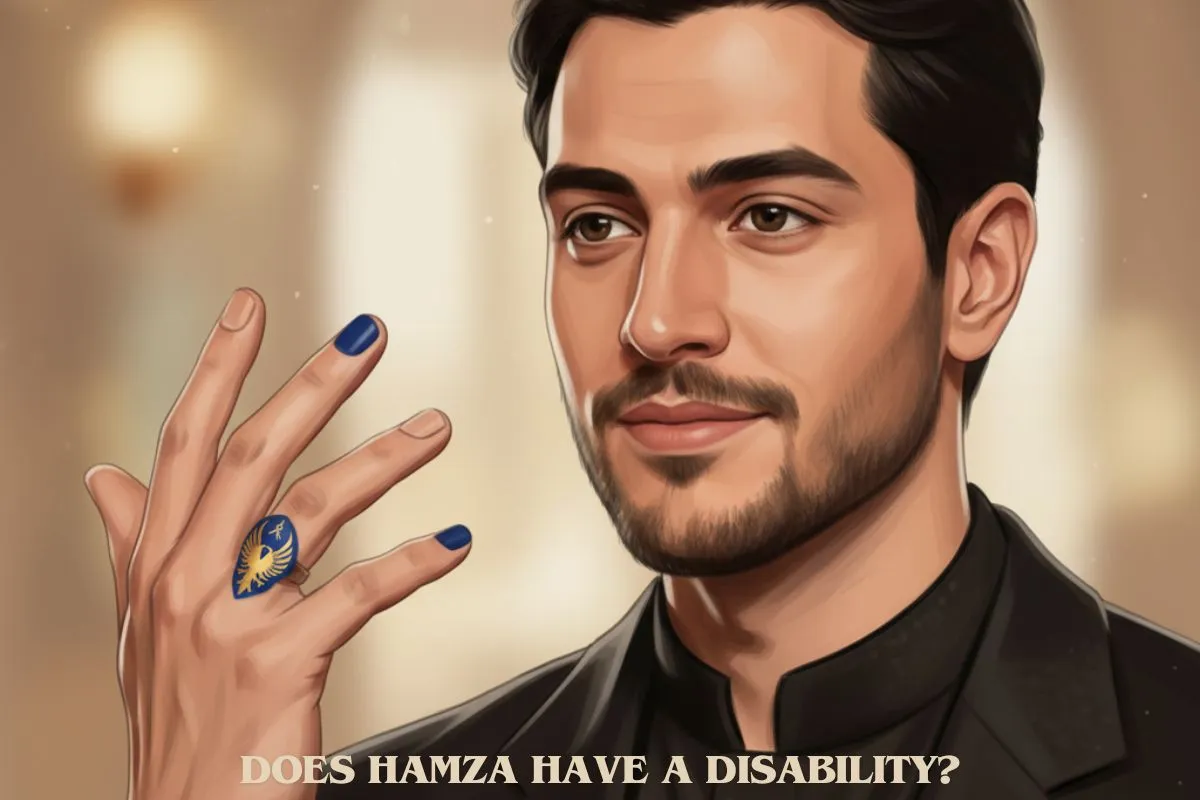
Hamza has not publicly described himself as “disabled” in the way most people use that word, but he has been very open about living with dyslexia, which he calls his “superpower” and “gift.” Public information focuses on his learning difference and achievements, not on any physical disability.
What is actually known about Hamza’s health?
-
Hamza Yassin, best known from Strictly Come Dancing and wildlife programmes, has spoken many times about having dyslexia.
-
He was diagnosed as a teenager and has said that dyslexia affects how he reads and writes, but also gives him strong visual memory and pattern-recognition skills that help his camerawork and dancing.
-
In interviews, he has described dyslexia as his “superpower” and a “gift,” explaining that it helps him think in pictures and remember complex dance routines.
Dyslexia is a specific learning difference, and in some contexts it can be considered a disability, but it does not define Hamza’s worth, personality, or success. There is no verified public information that he has a physical disability or mobility impairment.
Why people ask “Does Hamza have a disability?”
Many people search this question after seeing Hamza on TV, online clips, or social media, and then jumping to conclusions based on very limited moments.
-
Short video clips often show only a few seconds of someone dancing, concentrating, or speaking, which can make natural mannerisms look exaggerated or “different.”
-
Hamza’s intense focus when dancing, his tall frame, and his long hair can all stand out on screen, which sometimes makes people more curious about him than about other contestants.
One reason this question spreads is the way internet culture rewards curiosity and speculation. People post quick questions like “What’s wrong with him?” or “Is he disabled?” under clips, and those comments get replies, likes, and more attention. Over time, that attention can accidentally turn into a rumor, even when there is no new fact behind it.
On a personal level, there is a familiar pattern many people with any visible or invisible difference experience: strangers feel entitled to ask deeply personal questions. When a friend of mine started using tinted glasses for migraines, people online repeatedly asked if she was blind or had “something wrong” with her. The questions were rarely cruel, but they were constant and exhausting, and they slowly shifted the focus away from her work and towards her health. That same dynamic can easily happen to someone like Hamza.
Public information vs private life
To separate fact from assumption, it helps to look at what Hamza has genuinely chosen to share, and where the line of privacy begins.
-
Publicly, Hamza has talked about:
-
Growing up in Sudan and moving to the UK as a child.
-
Being diagnosed with dyslexia at school, getting support, and going on to study zoology and biological photography.
-
His passion for wildlife, filming in the Scottish Highlands, and learning to dance on Strictly Come Dancing.
-
-
He has not positioned his health as the core of his public identity. Instead, he highlights his love for nature, learning, and persistence. When he describes dyslexia, it is usually to encourage young people who feel “different” at school, not to ask for sympathy.
Everyone, including public figures, has a right to keep medical details private unless they actively choose to share them. Even if a celebrity does talk about one aspect of health (for example, dyslexia), that does not mean everything else about their body or mind is open for public guessing.
A simple test is useful: if the same question would feel intrusive or uncomfortable when asked about a close friend at the dinner table, it is probably too personal to turn into a viral search topic.
Disability is not a definition of worth
It is important to be clear: having a disability does not make anyone less capable, less successful, or less worthy of respect. At the same time, labeling someone as disabled when they have not chosen that label can be both inaccurate and hurtful.
-
Hamza’s story shows that a person can live with a learning difference, face challenges, and still become a highly skilled professional and a beloved TV personality.
-
When he calls dyslexia his “superpower,” he is pushing back against the idea that a diagnosis is only a limitation; he is showing how it also shaped strengths like memory, observation, and creativity.
People with disabilities often say that the hardest part is not the condition itself, but the way others treat them. A wheelchair user once explained to me that “the stairs are more disabling than my legs” – meaning the environment and attitudes around her created more barriers than her body did. In the same way, gossip or pity can feel more suffocating than any diagnosis.
When conversations around Hamza narrow down to “Is he disabled?” instead of “What has he achieved?” they risk treating disability as a scandal or curiosity, rather than a normal part of human diversity.
The harm of online speculation
Speculating about whether someone “has a disability” may seem harmless, but it carries real consequences in how people are seen and discussed.
-
Guessing about medical conditions from a distance is almost always inaccurate, because viewers see only edited clips, specific lighting, and pressed-for-time interviews.
-
Repeated speculation can also turn a normal trait – like looking serious while concentrating, moving differently when tired, or speaking in a particular rhythm – into something that strangers label as “wrong” or “suspicious.”
Online, this tends to snowball: one comment becomes a thread, then a video, and soon “Does Hamza have X?” appears as a search suggestion. That chain doesn’t reflect new evidence; it reflects repetition.
Anecdotally, a teacher once described how a shy student of hers went viral for a short video. Within days, strangers were diagnosing him with multiple conditions in the comments, even though he simply hated being filmed and looked down when nervous. That experience deeply shook his confidence and made him even more anxious in public. The damage came not from any real health issue, but from the crowd’s determination to “figure him out.”
Confidence, personality, or neurodiversity?
On-screen, it is easy to misread confidence, shyness, or simply being deeply focused as signs of a hidden condition.
-
Hamza has talked about his visual way of thinking and learning, which is common among people with dyslexia. This can influence how he memorises dances, tells stories, or explains ideas.
-
Some viewers may notice his quiet, thoughtful style and assume anxiety or another diagnosis, when it may simply reflect his personality and his experience living close to nature rather than in big cities.
Neurodiversity is a broad term that covers different ways brains work and process information, including dyslexia, ADHD, autism, and more. Not every difference needs a label, and not every label is ours to apply to someone else. In many cases, what people are really seeing is:
-
A different communication style.
-
A unique way of concentrating.
-
Cultural or language background shaping body language and tone.
When those natural variations show up on TV or online, audiences sometimes rush to medical explanations, instead of accepting that people simply move, speak, and think in many valid ways.
What actually matters about Hamza
When people search about Hamza, they are often drawn initially by curiosity about how he looks or behaves. However, the parts of his story that truly stand out have little to do with any label of disability.
-
He moved from Sudan to the UK as a child, learned English largely through watching nature programmes, and built a life in the Scottish Highlands as a wildlife cameraman and presenter.
-
He completed a degree in Zoology with Conservation and later a Masters in Biological Photography and Imaging, despite the obstacles he faced at school because of dyslexia.
-
He went on to win Strictly Come Dancing 2022, impressing judges with his improvement, musicality, and work ethic, even though he had no formal dance background.
Focusing on these achievements respects the story he has chosen to share: one of persistence, love for nature, and creative learning. When conversations about him centre only on “what’s wrong with him?” they miss the point of everything he has worked for.
On a smaller scale, this echoes how many people feel in their own lives. Plenty of students, friends, or colleagues will say, “I don’t want to be known as ‘the one with X condition’; I want to be known for my work, my humour, my kindness.” That human wish applies to Hamza just as much as anyone else.
Why questions about disability go viral
Searches like “Does Hamza have a disability?” do not happen in isolation. They live inside a wider online ecosystem where curiosity, algorithms, and attention shape what people talk about.
-
Algorithms tend to push topics that many people click on, comment about, or argue over, regardless of whether the conversation is kind or fair. Sensitive questions about health often fall into this category.
-
Content creators sometimes respond to trending questions quickly, making videos or posts that repeat the speculation, because they know those subjects attract more views.
This is not only about one celebrity. It is part of a broader pattern where people with visible differences, neurodivergent traits, or simply unusual styles are turned into “explain this” puzzles.
As a content creator, it is easy to feel the pull of those trends. There was a moment when a friend suggested writing a piece titled “What’s wrong with X influencer’s face?” because it was a trending query. Saying no to that kind of idea can feel risky, because viral topics promise quick traffic. Yet choosing not to exploit those questions protects real people from becoming clickbait, and it helps build a healthier internet culture in the long run.
Respectful language and awareness
When talking about disability – whether about Hamza or anyone else – language matters. It shapes whether a conversation feels respectful or dehumanising.
Helpful approaches include:
-
Using neutral, factual phrasing such as “lives with dyslexia” rather than dramatic language like “suffers from it,” especially when the person themselves describes it as a strength.
-
Avoiding casual diagnoses (“He must be autistic,” “She’s definitely got something”) when you are not a professional and have never met the person.
More respectful questions might be:
-
“What has Hamza shared about his learning journey?”
-
“How does dyslexia affect his work and creativity?”
These questions centre his voice and experience instead of treating him as a mystery to be solved.
A simple guideline is: if the person has used a specific word about themselves (for example, “dyslexic”), it is usually fine to repeat it respectfully and in context. If they have not, it is better to avoid attaching labels.
Why is Hamza’s hair so long?
Many viewers notice Hamza’s long dreadlocks immediately and wonder why he keeps his hair that way. There is a clear, light-hearted story behind it.
-
Hamza has explained in interviews that his long hair began as an act of rebellion against childhood haircuts, where his mother would give the same short “number two” cut to him, his brother, and his father.
-
At some point, he simply decided he was “done” with that style and chose to grow his hair, eventually keeping his dreadlocks uncut for around 17 years.
On Strictly and on his wildlife programmes, his hair has become a recognisable part of his image, but he still treats it with humour. In many cultures, hair can carry meaning – from faith and identity to personal freedom – yet in his case, the origin story is surprisingly everyday: a young man tired of the family haircut.
What is Hamza’s background?
Hamza’s background weaves together migration, education, and a deep connection to nature.
-
He was born in Sudan in 1990 and spent his early childhood there before moving to Northampton in England at around eight years old.
-
His parents were both doctors, and he initially considered following them into medicine, but later chose to study zoology instead, feeling that this path matched both his strengths and his dyslexia.
-
He went on to gain a zoology degree from Bangor University and then a Masters in Biological Photography and Imaging from the University of Nottingham, building the foundation for his career as a wildlife cameraman.
Hamza eventually settled in a small village in the Scottish Highlands, where he films wildlife and has spoken warmly about the local community that has “adopted” him as one of their own. This blend of Sudanese roots and Scottish Highland life strongly shapes his outlook and storytelling style.
Is Hamza Yassin in a relationship?
Questions about Hamza’s relationship status often appear alongside searches about his health and background, but publicly available details remain limited and low-key.
-
Media coverage has occasionally mentioned that he receives enthusiastic fan attention after Strictly and has hinted that he has been in or is in a relationship, but he generally keeps his private romantic life out of the spotlight.
-
Interviews about his personal life tend to focus on his love for the Highlands, his work, and his experiences of racism and belonging, rather than on dating or partners.
Ultimately, the absence of detailed information here is deliberate. Many public figures choose to protect their partners, family, and personal relationships from intense public interest, which is a reasonable boundary to maintain.
What do Hamza Yassin’s parents do?
Hamza has shared some information about his parents, especially in the context of his move from Sudan and his early life.
-
Both of his parents are doctors, specifically gynaecologists, and their medical careers were part of the reason the family relocated to the UK when he was a child.
-
At one point, Hamza considered going into medicine like his parents, but after a heartfelt conversation with them, he chose to follow his passion for wildlife and admitted that studying medicine would be especially demanding with his severe dyslexia.
That family conversation is a powerful example of supportive parenting: they listened when he explained his challenges and dreams, and they did not reduce him to his diagnosis. Many readers with learning differences will recognise how important it is to have at least one adult who says, “You can succeed on your own path.”
Bringing it back to the main question
Putting all of this together:
-
Hamza has a confirmed learning difference, dyslexia, which he openly discusses and reframes as a source of strength.
-
There is no verified public evidence that he has a physical disability, and he has not invited the public to speculate on any other medical labels.
-
Constantly asking “Does he have a disability?” turns a complex, successful human being into a medical question, and risks reinforcing the false idea that disability is something to gossip about rather than a normal part of life.
For readers, the most respectful and genuinely helpful approach is to focus on what Hamza himself has chosen to share: his journey with dyslexia, his dedication to wildlife, his courage to step onto a dance floor with no prior training, and the message that different ways of thinking can lead to extraordinary things.