Short hair and fascinators get a bad reputation together. People assume you need long, thick hair to pin anything down, and when that’s not true for you, the whole idea feels off limits. It isn’t. I’ve styled fascinators on pixie cuts, blunt bobs, and everything in between, and the fix usually comes down to two things: picking the right base for the fascinator itself, and prepping your hair so it actually has something to grip onto.
This guide walks through what actually works, based on real trial and error rather than generic styling advice you’ll find copied across a dozen other sites.
Why Short Hair Fascinators Fail (And How to Avoid It)
Most fascinator disasters happen for one of three reasons: the wrong attachment type, hair that’s too clean and slippery, or placement that fights against your natural parting instead of working with it.
If you’ve ever had a fascinator slip sideways by lunchtime at a wedding, it was probably one of these three things, not a flaw in your hair itself. Once you know what to look for, short hair is actually easier to work with than long hair in some ways, because there’s less weight pulling the piece down.
Step 1: Choose a Fascinator Built for Short Hair
Not every fascinator is created equal when it comes to short styles. Oversized, heavy pieces need more hair to anchor into, and they’ll tug at pixie cuts or bobs within an hour.
Look for these attachment types instead:
Headbands work best if your hair is very short, like a pixie or close crop. There’s nothing to pin, so nothing can come loose.
Small combs suit bobs and slightly longer crops. The comb needs a bit of length to grip, so this works well once your hair passes chin length.
Beak clips (sometimes called snap clips) are the most versatile option for short hair in general. They clip shut around a small section, so even fine or thin hair holds them reasonably well.
Skip anything with a large, heavy base unless it’s on a headband. The bigger the fascinator, the more it needs real hair volume to stay put, and short hair often can’t provide that.
Step 2: Give Your Hair Something to Hold Onto
This is the part most guides skip, and it’s the part that actually matters most. Freshly washed hair is too slippery for clips, combs, or pins to grip properly.
If you can, style your hair the day after washing rather than right after. Day-old hair has natural texture and slightly more friction, which makes a real difference.
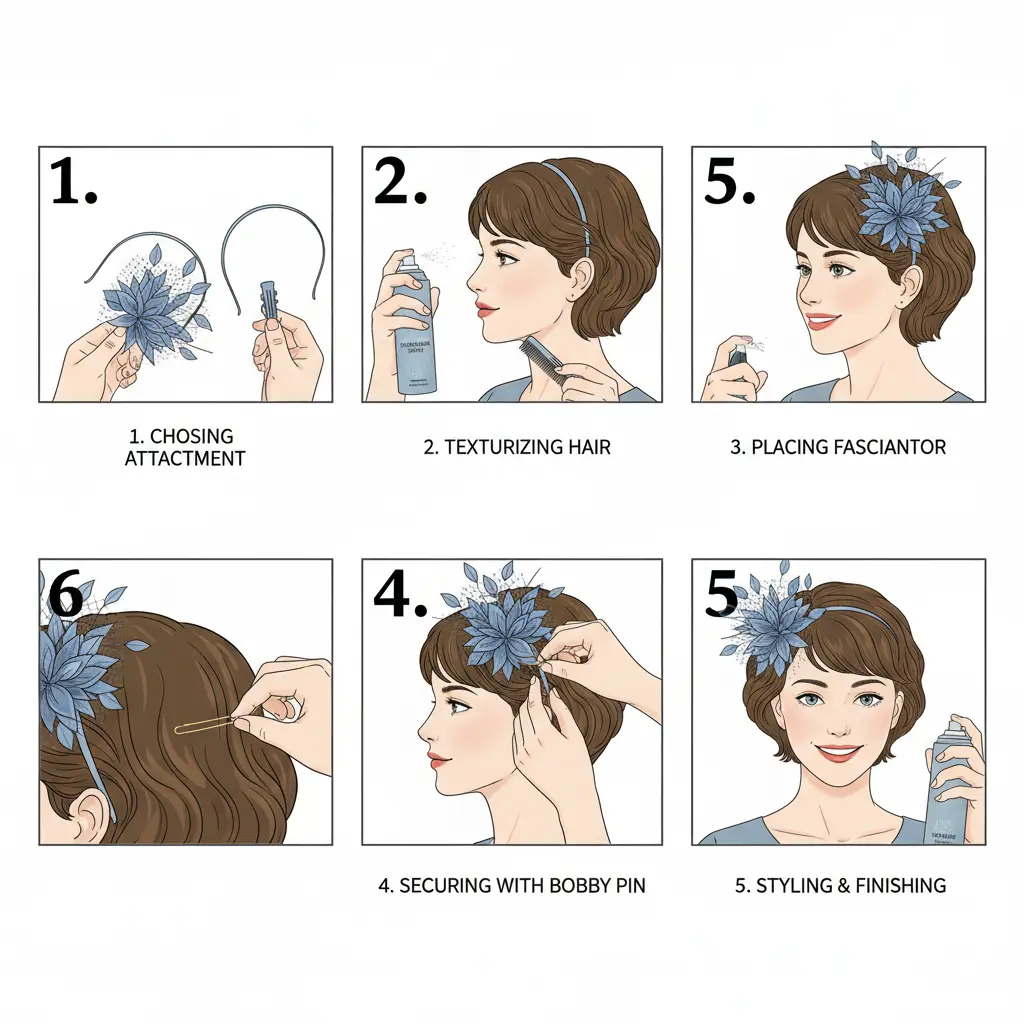
If you have to style on wash day, work in a small amount of dry shampoo or a texturizing spray at the roots before you attach anything. This isn’t about volume for the sake of volume, it’s specifically to give clips and combs something to bite into.
For very fine or silky short hair, a light backcombing at the spot where the fascinator will sit creates a base that holds far better than smooth hair ever will.
Step 3: Attach It Properly
Once your fascinator and your hair are both ready, the attachment method depends on what you’re working with.
For headbands, slide it on and rotate the fascinator itself to whatever angle feels right, since the band does the holding and the fascinator can move slightly without falling.
For combs, slide it in at an angle, following the direction your hair naturally sits, not against it. Pushing a comb against the grain of your hair is the number one reason they slip out during the day.
For clips, open it fully, take a small section of hair (not too much, not too little), and snap it closed close to the scalp. A clip that’s positioned an inch away from the roots has much more leverage to work loose than one snapped directly at the base.
Whichever method you use, add one or two bobby pins in a matching color as backup, angled in a slight X shape through the base of the fascinator into your hair. This alone prevents most slippage during a long day of standing, hugging people, and the occasional dance.
Where Should It Actually Sit?
Tradition says the right side, angled forward, roughly above the eyebrow. That rule comes from formal British event etiquette and it’s still a safe, classic choice if you’re not sure where to start.
That said, your parting matters more than tradition here. If you part your hair on the left, placing the fascinator on the right can look slightly disconnected from your natural hairline. Try positioning it on the same side as your part instead, angled toward your face rather than straight up. It tends to look more intentional and sits more securely, since it’s working with your hair’s natural direction rather than against it.
Fascinators for Short Hair Over 50
Mature short hairstyles, whether that’s a soft pixie, a graduated bob, or a cropped cut, tend to pair best with smaller, lighter fascinators. Heavier or overly ornate pieces can overwhelm a simple haircut and end up looking more costume than elegant.
Pillbox-style fascinators on a headband are a reliable choice here, since the band takes the pressure off needing to pin into hair that might be finer or thinner than it once was. Keep jewelry minimal so the fascinator remains the statement piece rather than competing with earrings or a necklace.
What If My Hair Is Extremely Short?
Buzz cuts, very short pixies, and closely cropped styles genuinely can wear fascinators, just with adjusted expectations.
Headband-mounted pieces are almost always the answer here, since there’s no reliance on hair length at all. If you specifically want a clip or comb style, look for fascinators with a built-in elastic loop, which some brands include exactly for this reason. The elastic gives you something to stretch around the head rather than depending on hair to grip.
Quick Troubleshooting
If your fascinator keeps sliding forward, the base is likely too far from your hairline. Move it back slightly and re-pin.
If it feels loose after an hour, your hair was probably too clean or smooth to start with. Add texturizing spray next time, or backcomb slightly at the attachment point.
If it tilts to one side, check that both sides of the clip or comb are seated evenly. An uneven grip is the most common cause of this.
Hairstyles That Work Well With a Fascinator
Sleek bobs let the fascinator stand out cleanly against a simple, polished base.
Pixie cuts pair naturally with smaller, delicate fascinators, since a large piece can overwhelm the cut.
Textured crops give clips and combs more to grip, which actually makes styling easier than it looks.
Side-swept fringes create a natural asymmetry that a fascinator can echo, giving the whole look more movement.
Final Thoughts
Short hair doesn’t limit your options nearly as much as it seems to at first. The real difference between a fascinator that lasts all day and one that ends up in your bag by 3pm usually comes down to matching the right attachment style to your specific length, prepping the hair properly beforehand, and reinforcing with a pin or two rather than relying on the clip alone.
Try it on before you finish your whole look, walk around the room, tilt your head, and adjust from there. Once you find the spot and method that works for your hair, it becomes second nature every time after that.